Building a brighter tomorrow with LEGO® bricks

Modular Downtown Buildings

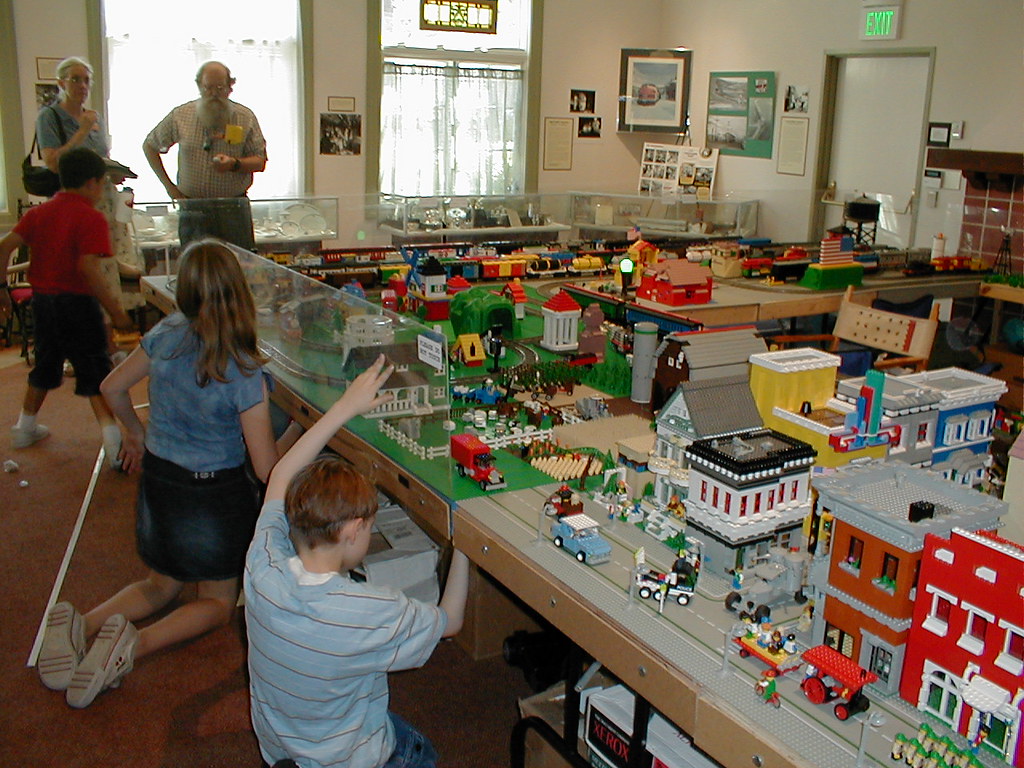
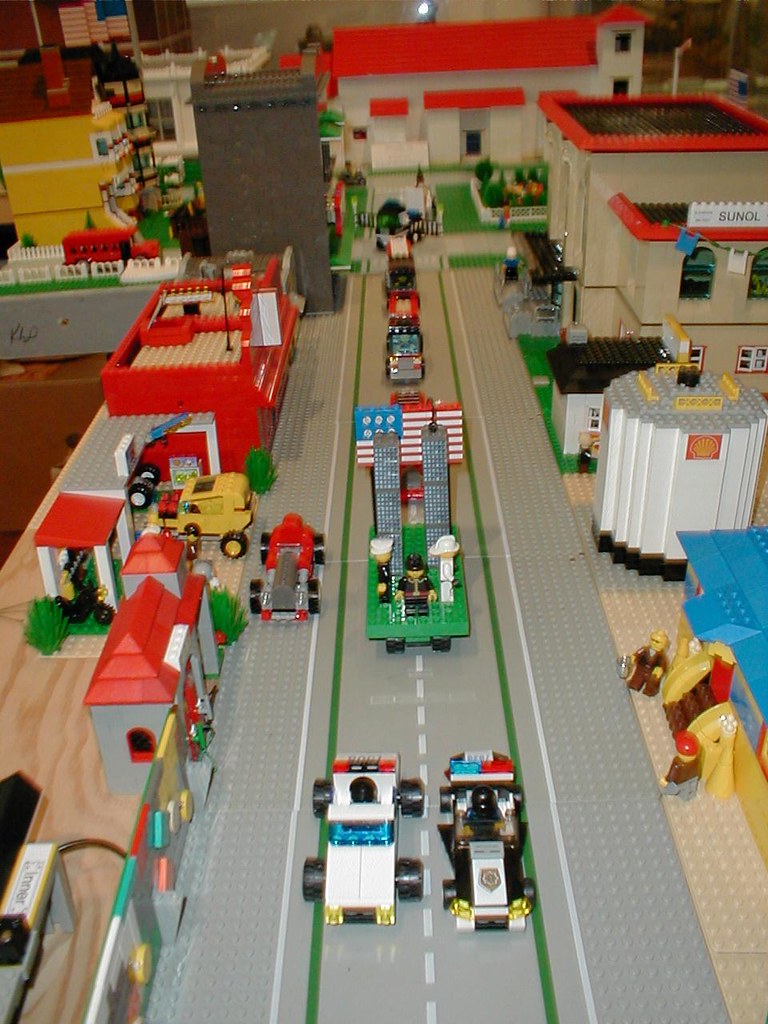
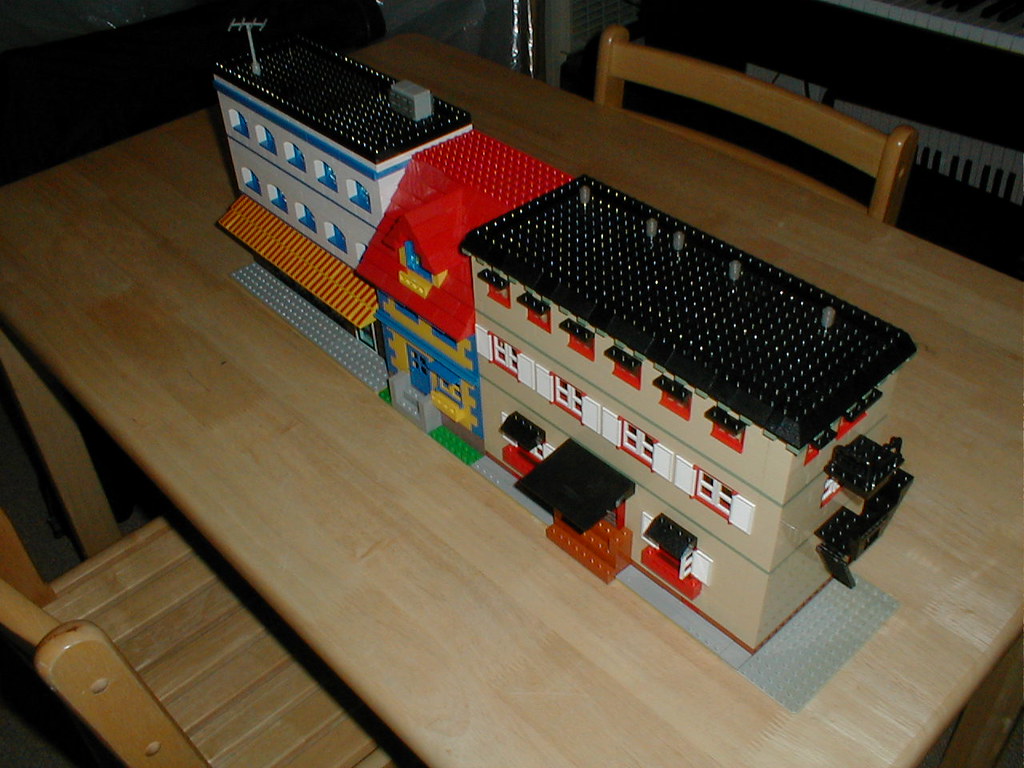
These buildings were made for the BayLTC train layouts. Fellow club member Kenny Paul and I agreed on a standard for the placement of Technic pegs to connect the buildings together. However, with practice it turned out to be easier to not connect them, but to just place them next to each other.

The pegs are placed in a 1×2 Technic brick with peg hole, at the 7th and 8th studs in from the street, at the 3rd and (optionally) 8th brick heights. In addition, pegs may be placed at the rear, also at the 7th and 8th studs from the edge. The backs and sides of the buildings are incomplete because they are not visible; the rule is that from street level to the 6th stud, and everything above 12 bricks in height, must be decorated.

The tan building has a removable wall on the right side. This allows it to be a corner building or to be in the middle of a series of buildings. The removable wall features a fire escape.

Read more

Maneki Neko

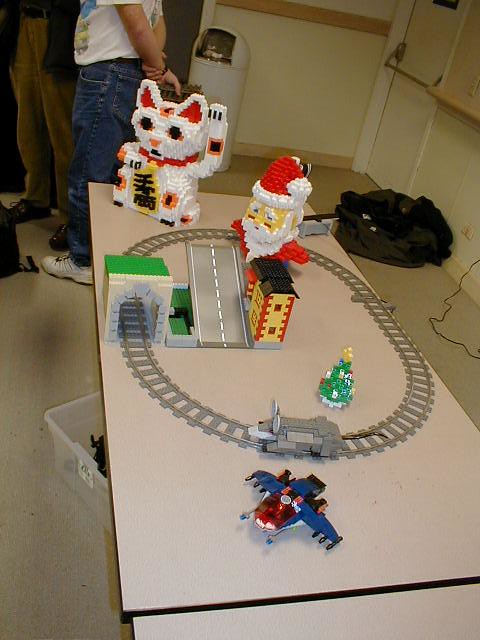
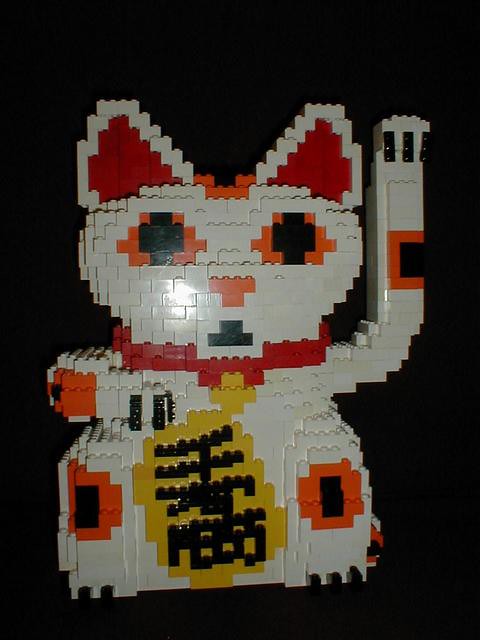
This LEGO sculpture of a Maneki Neko (Japanese good-luck cat) was one of my earliest models, after building the Pok�mon out of basic bricks alone, I allowed myself the luxury of plates as well, in order to approximate the script on the coin. The cat itself is just basic bricks though, except for the arm detachment mechanism.

Read more

Articulated light rail vehicle

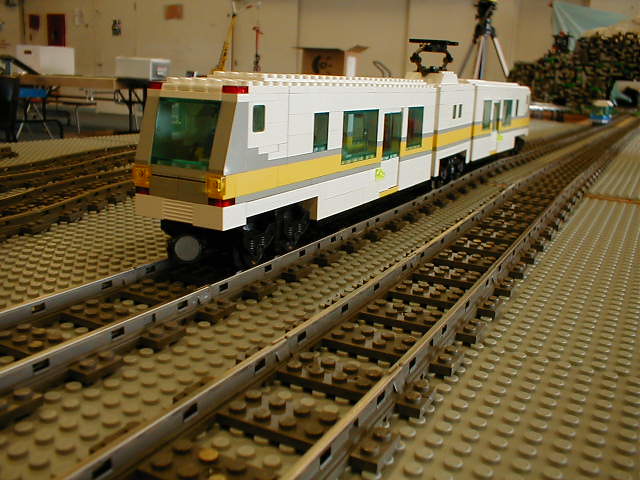
This is my second LEGO train model, a modern light rail vehicle (LRV). It is inspired loosely by the new vehicles that have recently entered service for the Santa Clara Valley Transportation Authority (VTA) in Santa Clara County, CA. Like the VTA LRV’s, it has three sections, with the middle one having a wheelset fixed to it, and has a “low floor” design, so that there are no steps to climb from the platform. This gives easy access to those in wheelchairs, with strollers, or with other limited mobility.

Read more